At CES 2024, 42dot announced its 'software-defined everything' strategy. As Hyundai Motor Company’s Global Software Center, we unveiled the new E/E architecture for SDV and core SDV (software-defined vehicle) technologies.
1. New E/E Architecture for SDV
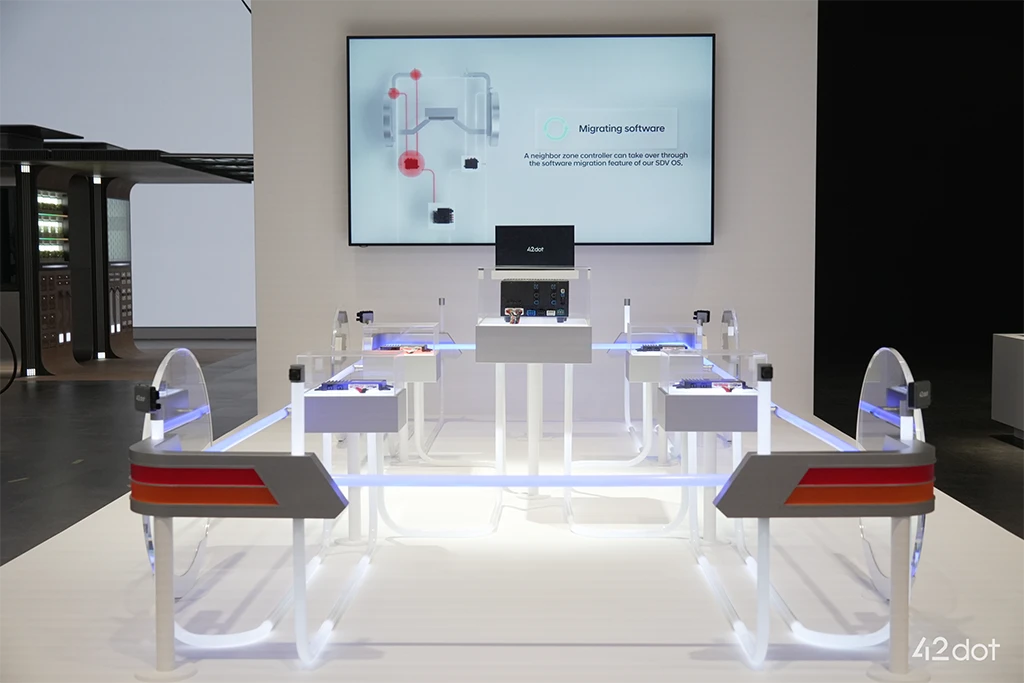
With the ever-expanding features, cars today harbor intricate E/E (electrical and electronics) architectures. Our SDV framework hinges on a hardware and software decoupled structure, a solution that simplifies the vehicle’s architecture and empowers engineers to focus on software development. This strategic decoupling grants engineers the flexibility and agility to enhance vehicle system development while ensuring unparalleled user-centric experiences. The streamlined architecture consists of a centralized HPVC (high-performance vehicle computer), zone controllers responsible for controlling the vehicle's sensors and actuators along with a fault-tolerant SDV OS system.
1.1 HPVC (High-Performance Vehicle Computer)
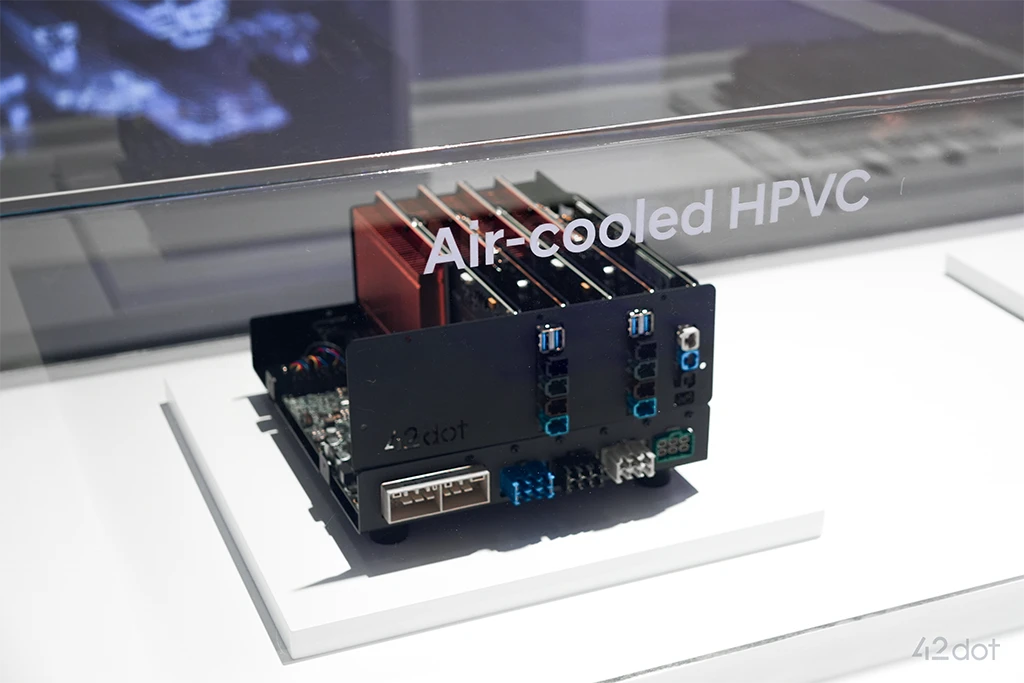
At the crux of the new E/E architecture for SDV, there is the HPVC (high-performance vehicle computer), also known as the brain. These HPVC units are the powerhouse of computation within the SDVs, integrating various functions while assuming the position of primary control. With the HPVC, SDVs can consolidate multiple roles and features into a single unit, reducing the reliance on numerous hardware controllers or multiple domain controllers. There are four main functions:
• Autonomous driving stacks covering from Level 2 ADAS to Level 4 automated driving systems, to enhance the user’s safe mobility experience.
• In-vehicle infotainment (IVI) for communication between the vehicle and the driver/passenger.
• Data gateway interconnects HPVC and controllers via a high-speed Ethernet backbone network and handles (collecting, exchanging and storing) a large amount of data internally through high bandwidth and throughput communication.
• Connectivity via RF communication to send and receive data outside the vehicle via LTE (5G), BT/WIFI, etc.
1.2 Zone Controller
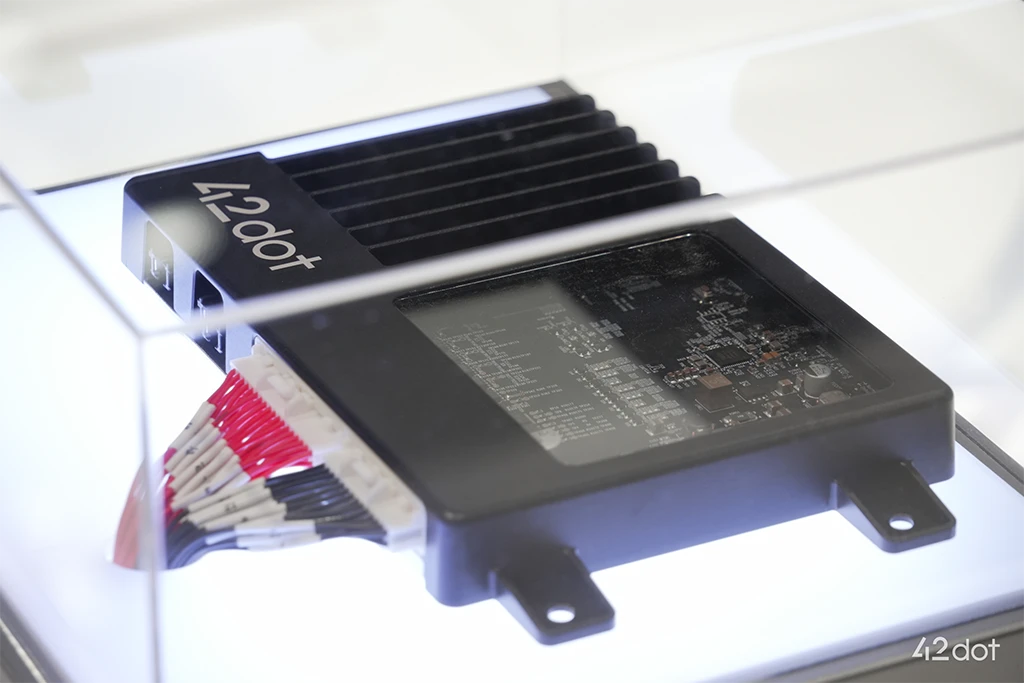
The zone controller is an electronic control unit that manages the vehicle's sensors and actuators. To accelerate the transition to SDV (software-defined vehicle), we physically integrate dozens to hundreds of existing control systems via zone controllers to simplify the E/E architecture. The functions of the control units are reorganized as they integrate into their respective zones. Consequently, the complexity and costs of wire harnesses and communication power nets are significantly reduced.
The new E&E architecture for SDV showcases one of its advantages of immediately responding to a malfunction with a fault-tolerant system. When a failure occurs in a zone controller, any other zone controller can take over the role of the failed controller due to the decoupled architecture and fault tolerance of the SDV OS.
1.3 SDV OS
The SDV OS efficiently manages applications across the vehicle built with the new E/E architecture, and effectively runs applications on physically distributed hardware, ensuring reliability and efficiency. Additionally, through the unified vehicle API, it enables vehicles composed of physically distributed hardware to be virtually managed as a single product, maximizing software flexibility and optimizing resource utilization across the vehicle. 42dot’s SDV OS is powered by Rust, to operate a mission-critical system that ensures safety.
2. Core SDV Technologies
42dot defines vehicles as ‘AI machines’ (machines that continually learn and improve to better serve). SDVs (software-defined vehicles) are not merely recipients of human-provided data but sophisticated devices that analyze and learn to perceive, plan, and control by utilizing data collected from their own sensors. We would like to introduce the SDV technologies that address the ever-evolving needs of users.
2. 1 Data-Driven Learning Systems
To build a smart AI system, 42dot is transforming vehicles into learning machines with the goal of not only advancing AI engineering but also bringing AI & autonomous driving technology to the public. 42dot is continuously collecting, curating, and training data to validate AI models and improve camera-based autonomous driving technology. To optimize the process, they have integrated an agile development of two-week sprints of engineering, performing simulation, deploying into R&D fleets, and eventually deploying software into service fleets. 42dot automates the training, optimization, deployment, and integration process to enhance efficiency (CI/CD). The MLOps and DataOps methodology enables 42dot to create a framework for rapid improvements of AI in mobility.
2.2 Safety-Designed Vehicle
Safety is our utmost priority, hence 42dot is implementing safety in all aspects of SDV hardware and software such as strengthening the cybersecurity of SDVs, redundant vehicle network and enhancing safe driving practices. 42dot is committed to developing a comprehensive, integrated SDV security solution that addresses cybersecurity concerns across multiple facets, encompassing the protection of personal information and the prevention of unauthorized data access.
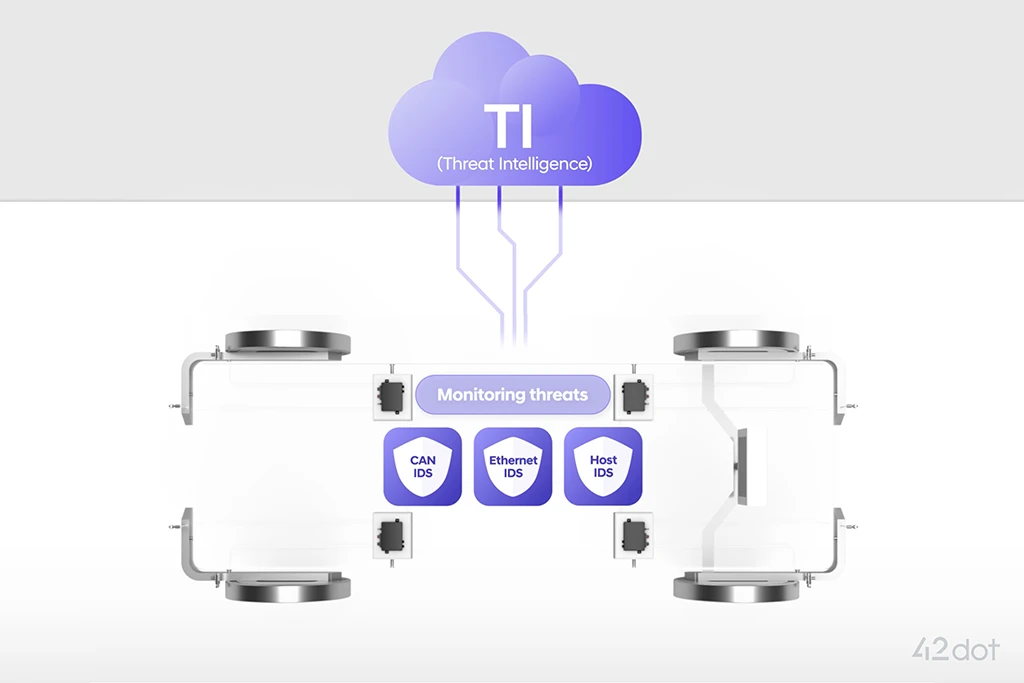
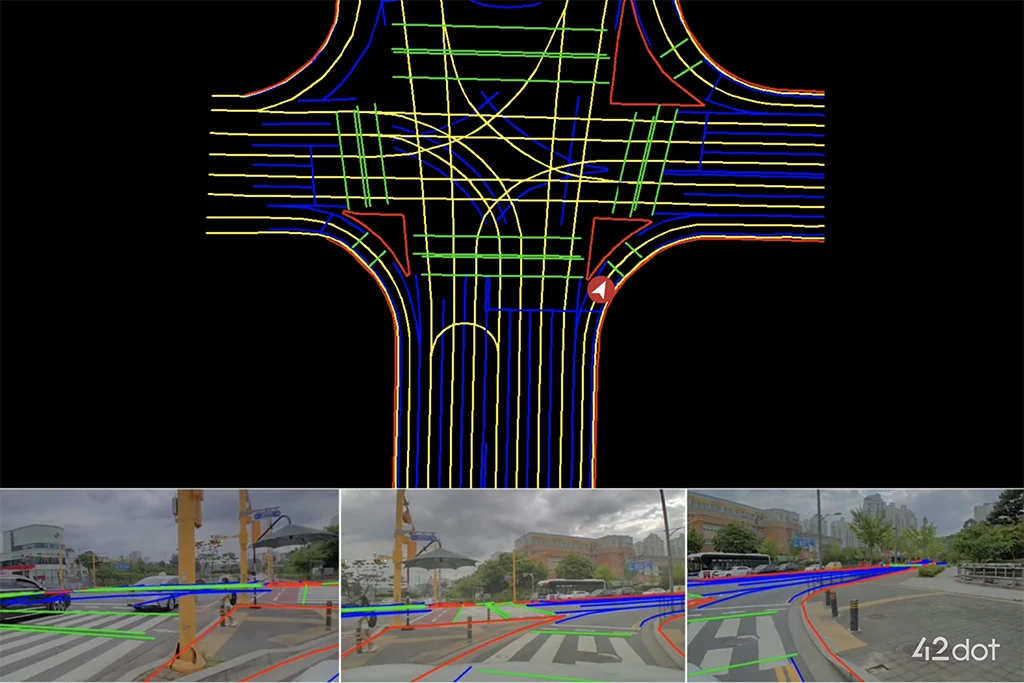
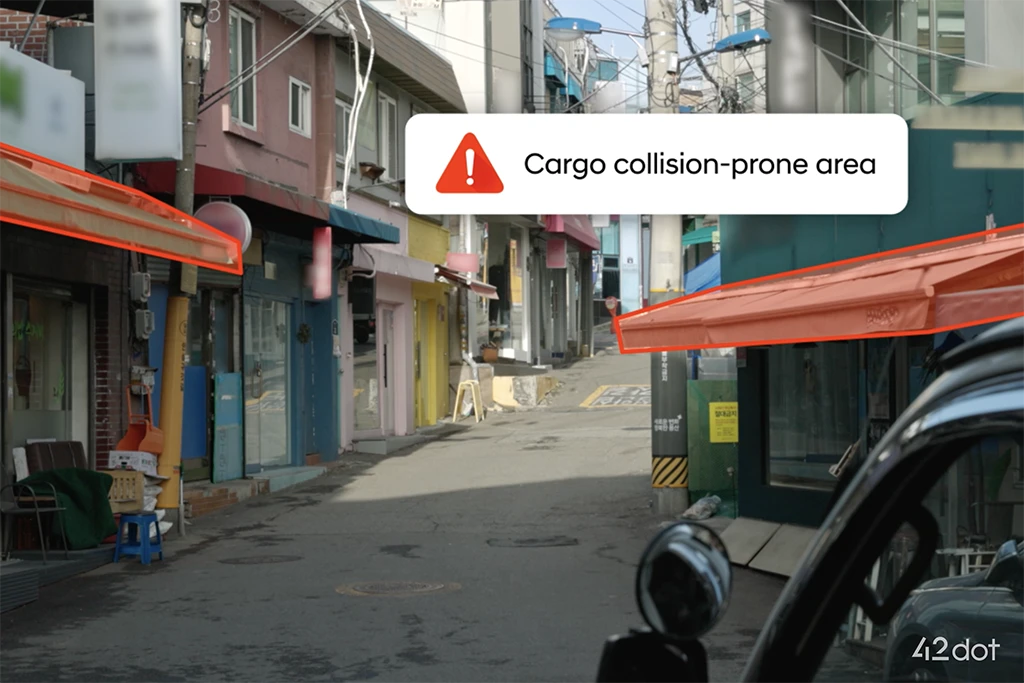
Moreover, safe driving can be enhanced through the use of AI. The SDV's AI algorithms employ 3D camera vision to perceive its surroundings, anticipate the vehicle's trajectory based on driver input, and alert against potential collisions with obstacles. This data is sent to the cloud and shared with other vehicles.
2.3 LLM for Advanced Mobility
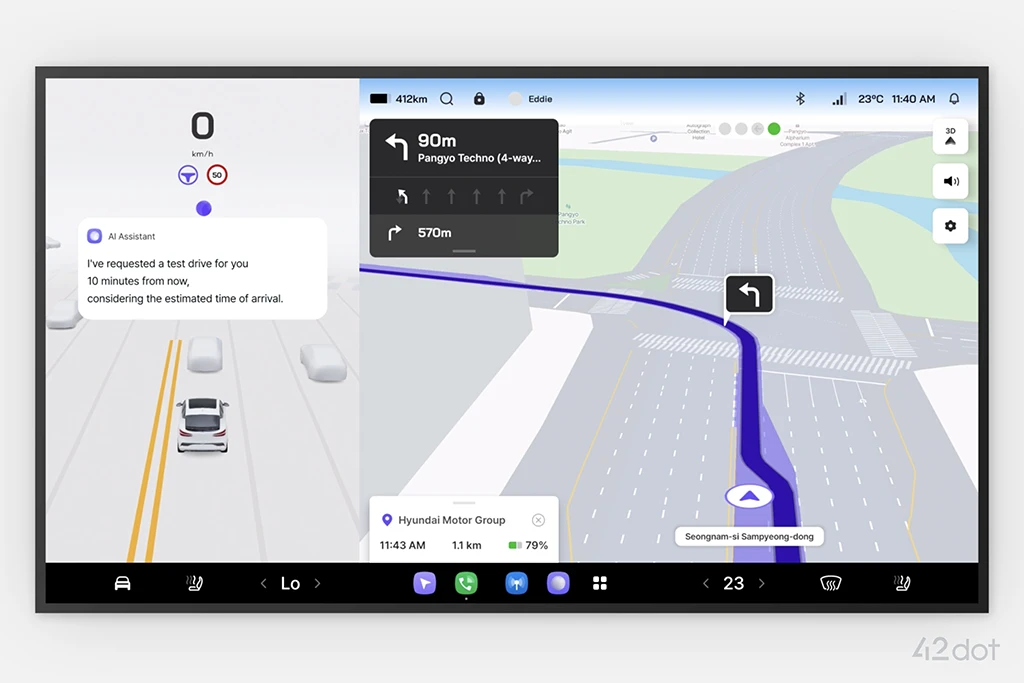
Large language models (LLM) harness the power to learn intricate language structures and when implemented correctly, they have the potential to change the way we move. Now, most existing vehicle AI assistants provide responses in a single-turn method. However, LLM-based assistants offer seamless multi-turn conversations that mirror human interactions. Empowered with the language structures trained from vast amounts of data, 42dot’s AI assistant, based on its own LLM, can generate proper human-like responses.
42dot’s own AI assistant will be integrated into various in-vehicle infotainment apps and connected services such as AI assistant, AI navigation, autonomous driving, intelligent fleet safety & management - the possibilities are endless. The AI assistant can provide tailored recommendations based on one’s habits and lifestyle. It can also generate necessary human readable/listenable alerts which improves the efficiency of fleet management.
2.4 Self-Managed Smart City
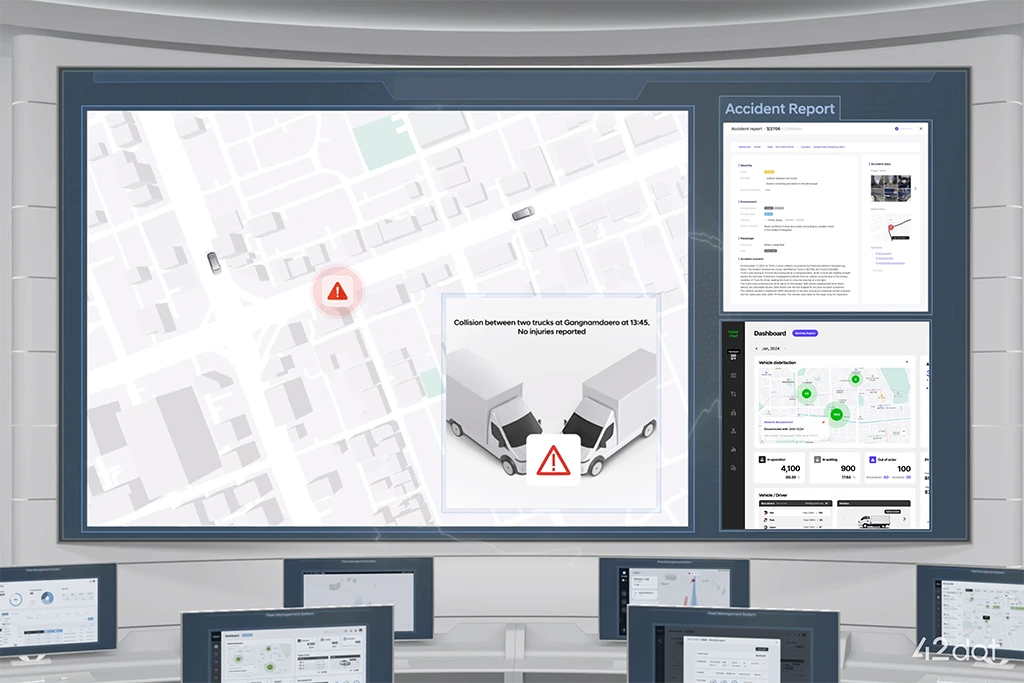
SDV technologies can extend to fleets and into cities to optimize businesses and cities’ transportation infrastructure. 42dot provides safe, user-centric autonomous technology and mobility algorithms to provide optimized routing based on real-time data. Road data managed via the cloud is shared with all SDV equipped vehicles to provide optimal mobility services.
All mobility information such as vehicle, driver, trip data, and real-time traffic information is digitized and managed via a centralized FMS (fleet management system). Vehicle collisions and accidents are handled with AI-driven accident alerts and reporting systems. The 42dot system automatically notifies relevant parties and creates documentation for operation needs. All driver, vehicle and traffic data including video clips are tamper-resistant, managed and protected with blockchain technology. These technologies not only enable us to manage fleets but also efficiently manage the movement of cities through “software-defined everything”.
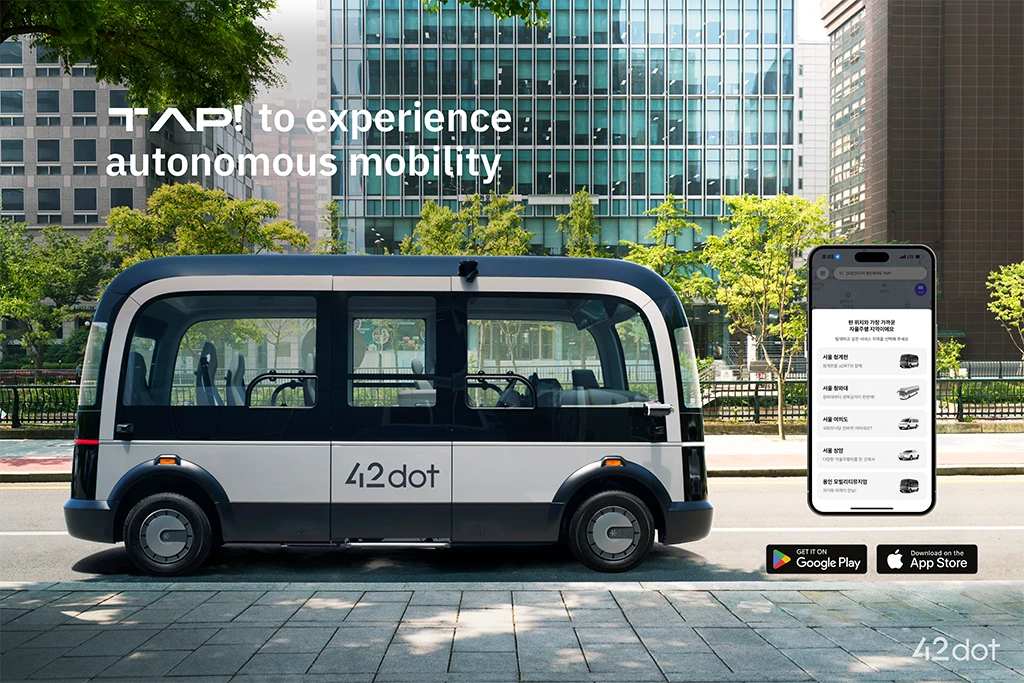
2.5 Autonomous Mobility Platform TAP!
42dot advances SDV and mobility technologies to provide customer-oriented mobility experiences. 42dot’s ‘TAP!’, the official autonomous mobility platform of Seoul, is leading the commercialization of autonomous mobility. The platform accommodates multiple autonomous vehicles from different providers, including 42dot, in seven different service locations. Users can dispatch different routes and autonomous vehicles such as autonomous taxis and shuttles.
At CES 2024, 42dot introduced SDV technology that is continuously updated for optimized performance, just like smart phones. We are applying smartphone development practices to automotive development. 42dot is actively recruiting talents who want to join our journey to making software-defined everything.
*Link: https://www.42dot.ai/en/careers/open-roles
BMX (Brand Marketing eXperience) Team
We are in charge of branding and marketing of 42dot