Software-Oriented
Computing & I/O Domain Architecture
SDVs simplify the complex ECU-based architectures of legacy vehicles and maximize functionality and performance through a software-centric architecture, enabling a scalable and standardized platform.
42dot’s E/E Architecture in particular, is designed with a separation between computing and I/O domains to improve software execution efficiency.
Zone Controllers responsible for I/O processing are positioned in close proximity to high-performance computing units to significantly reduce wiring complexity, while restructured input and output relationships improve architectural visibility and system-level understanding. This approach establishes clear boundaries across power and communication architectures while enabling a more structured distribution of vehicle functions.
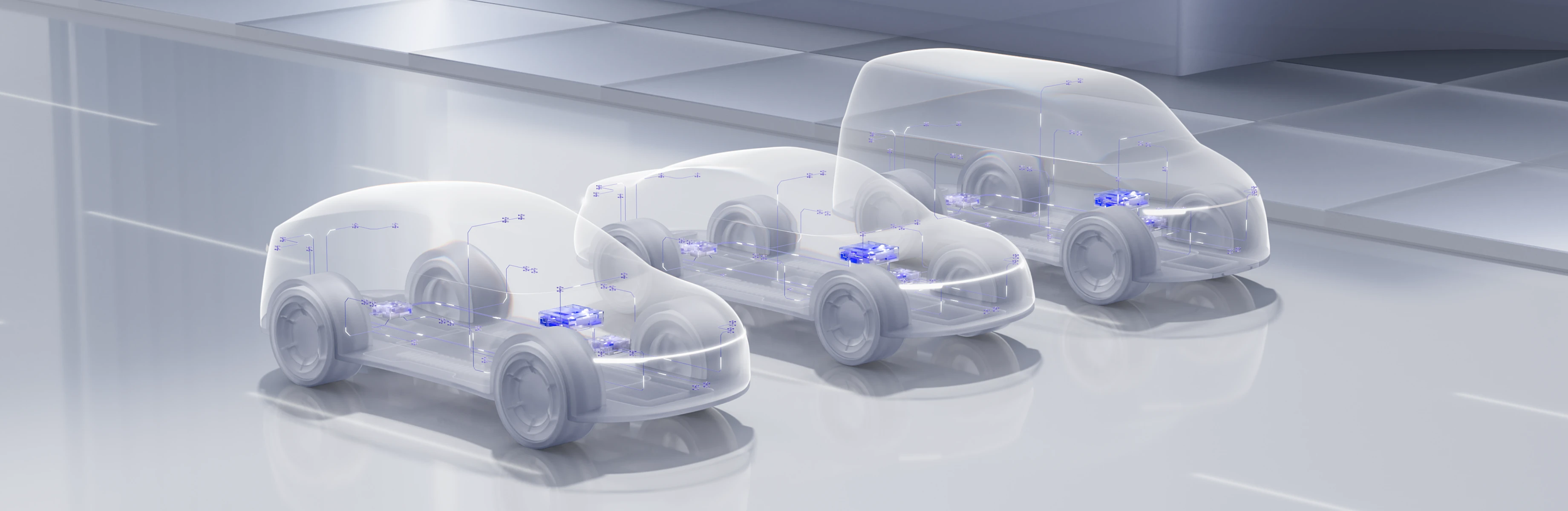
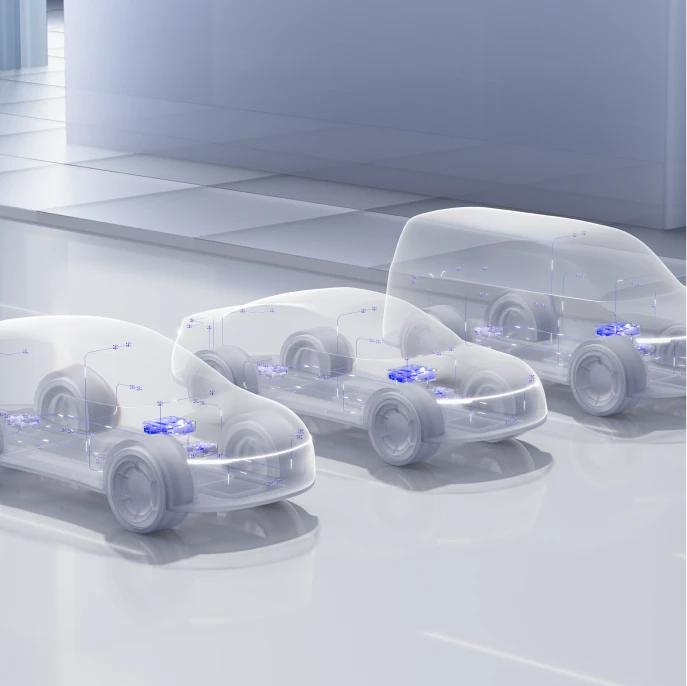
SDVs simplify the complex ECU-based architectures of legacy vehicles and maximize functionality and performance through a software-centric architecture, enabling a scalable and standardized platform.
42dot’s E/E Architecture in particular, is designed with a separation between computing and I/O domains to improve software execution efficiency.
Zone Controllers responsible for I/O processing are positioned in close proximity to high-performance computing units to significantly reduce wiring complexity, while restructured input and output relationships improve architectural visibility and system-level understanding. This approach establishes clear boundaries across power and communication architectures while enabling a more structured distribution of vehicle functions.
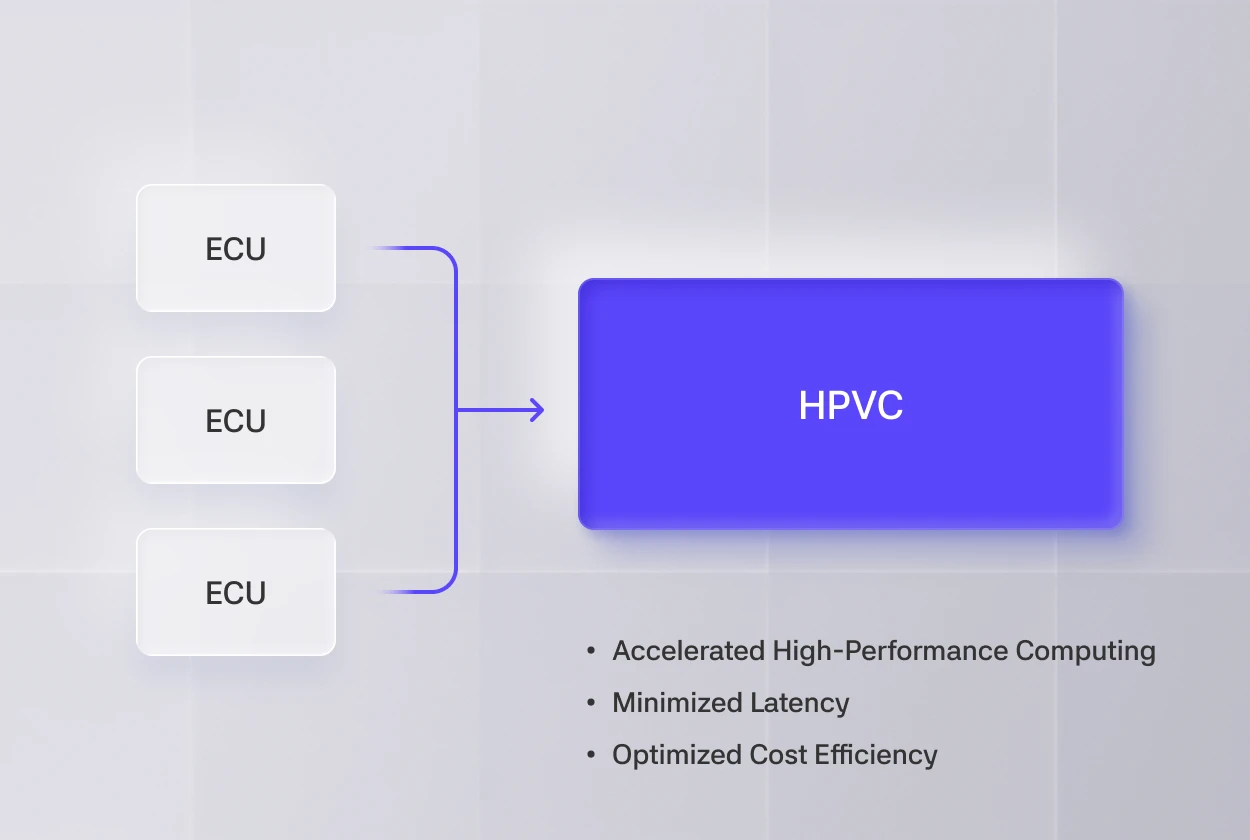
Resource Optimization
Vehicle hardware is treated as a high-cost resource that is difficult to modify or replace. To maximize utilization of these valuable resources, the architecture is designed with the flexibility to support future functional expansion through greater general-purpose scalability. Processing resources that were traditionally distributed across multiple ECUs and limited to specific functions are consolidated into a single high-performance computing platform, eliminating inefficiencies and communication overhead associated with distributed processing. Centralizing computing resources enables more efficient resource utilization, reducing system cost and architectural complexity while shortening end-to-end processing time to maximize overall system performance.
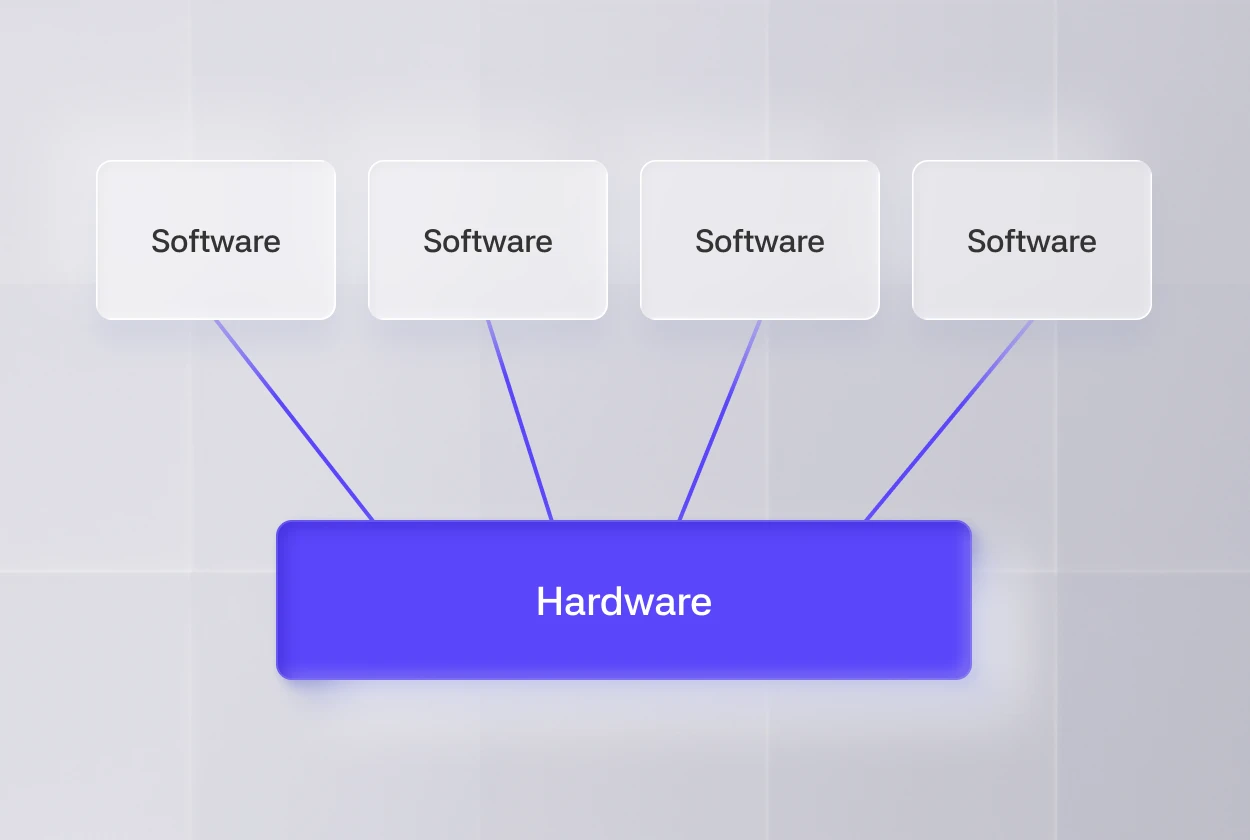
Resource Sharing
By enabling multiple applications to access common hardware resources, the architecture reduces unnecessary hardware overlap and maximizes scalability through system standardization. Sharing hardware resources such as sensors and actuators — traditionally tied to individual ECUs — further improves overall system efficiency.
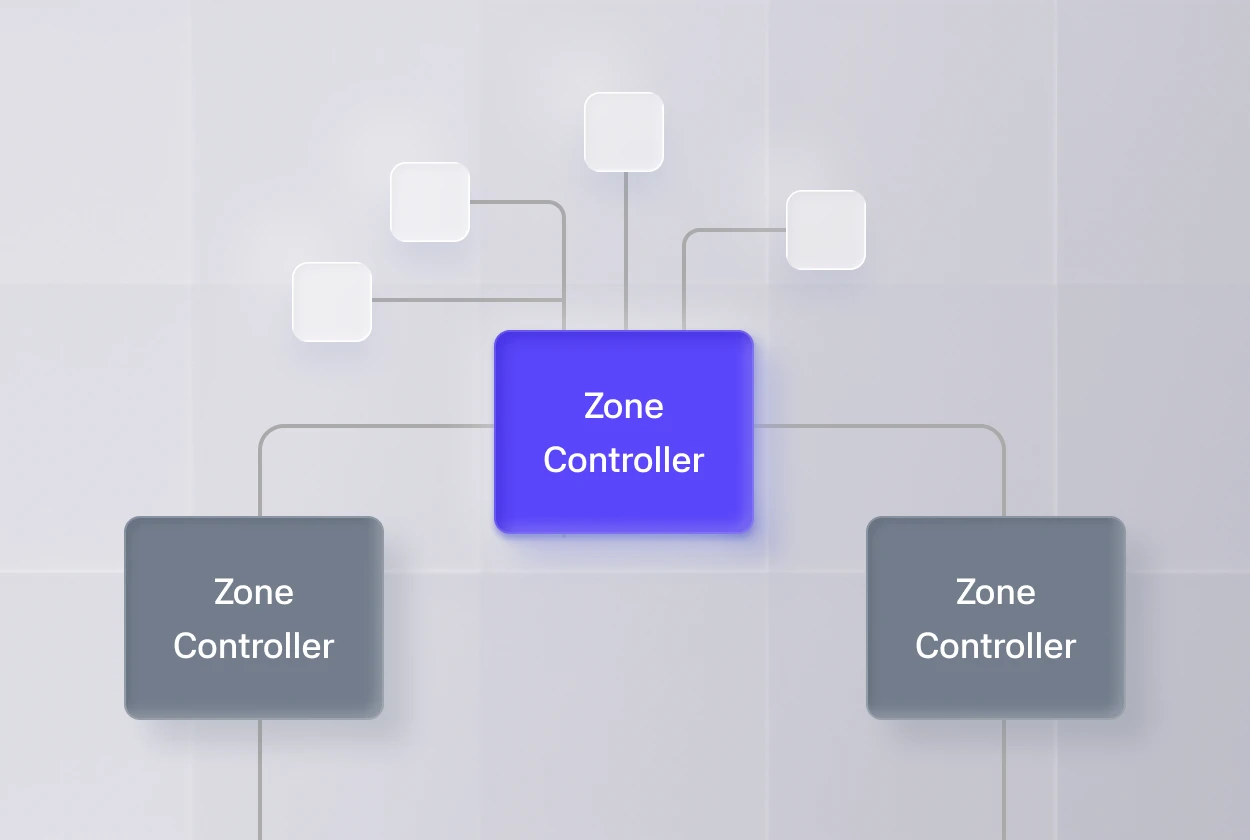
Hardware Locality Maximizing Efficiency
42dot’s zonal architecture organizes system components around zones rather than individual functions, reflecting the physical distribution of vehicle hardware. Each zone manages local resources and exchanges data with the HPVC (High-Performance Vehicle Computer) through a high-speed network, preserving hardware locality while preventing functions from being tied to specific zones. This architecture enables more flexible allocation of control functions while reducing hardware complexity and system cost. By minimizing wiring length and weight, it further simplifies and streamlines the overall vehicle architecture.
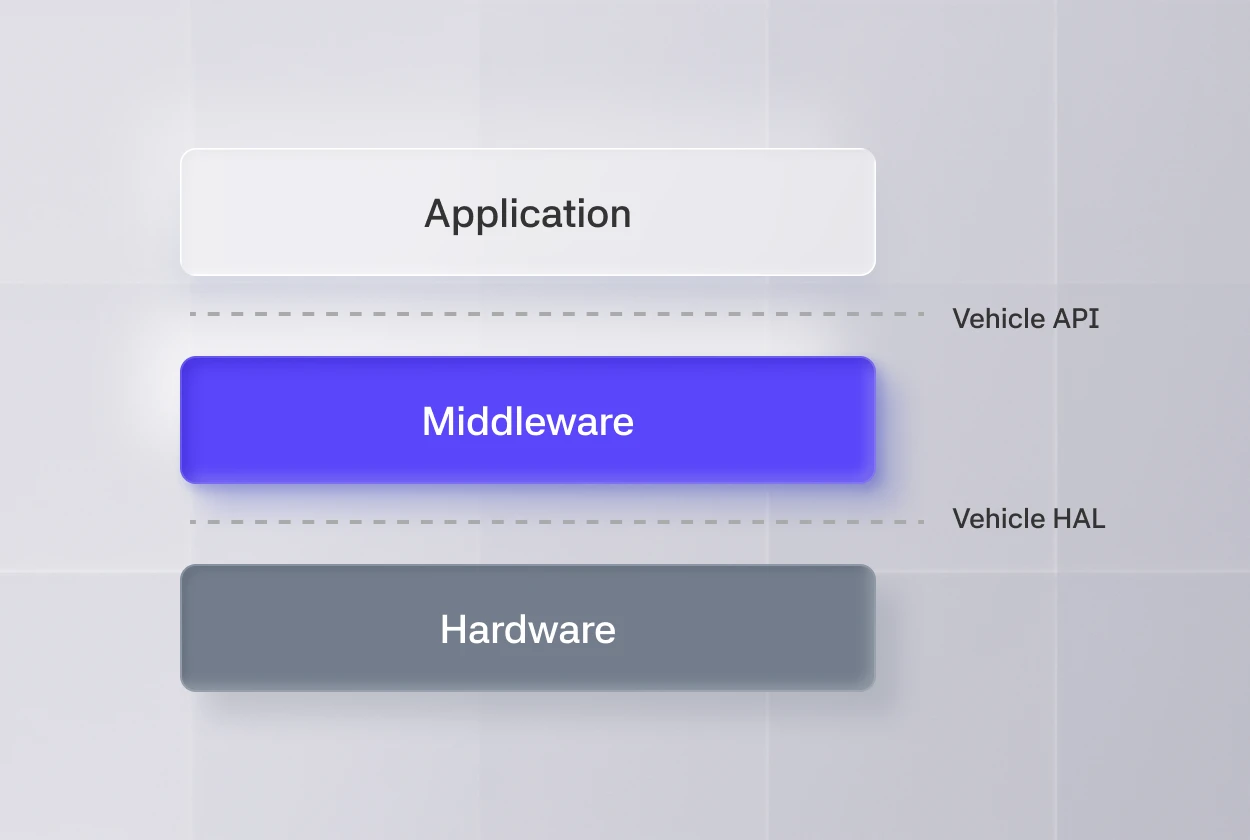
Transitioning to Software-Oriented Development
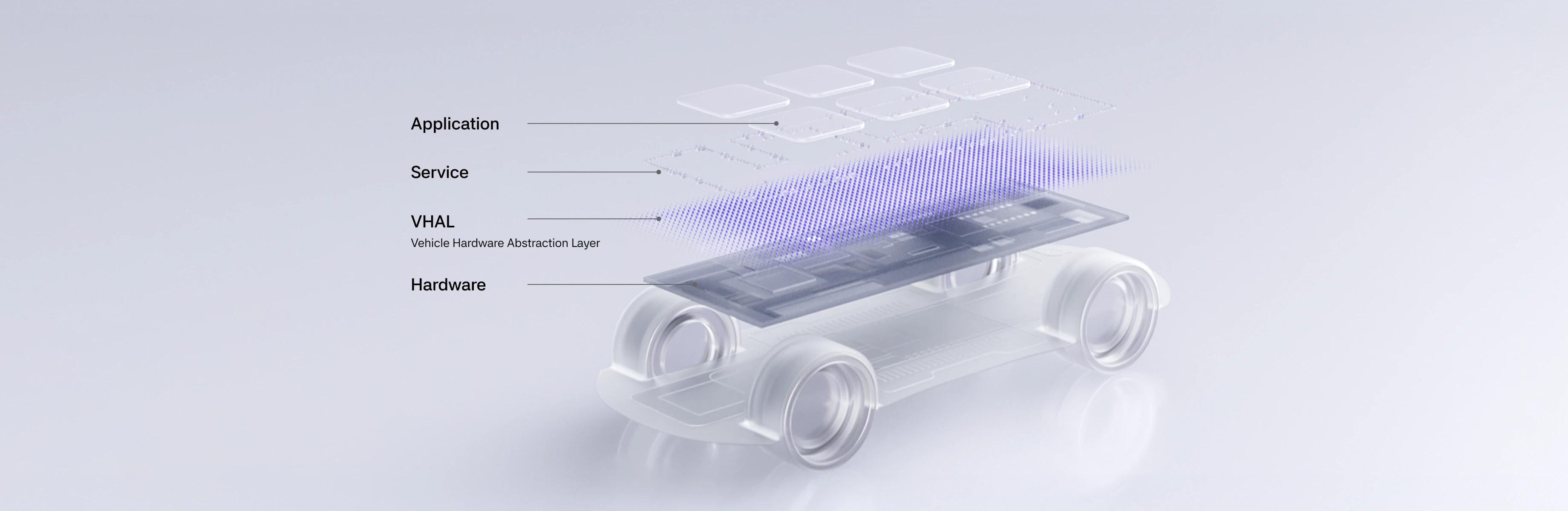
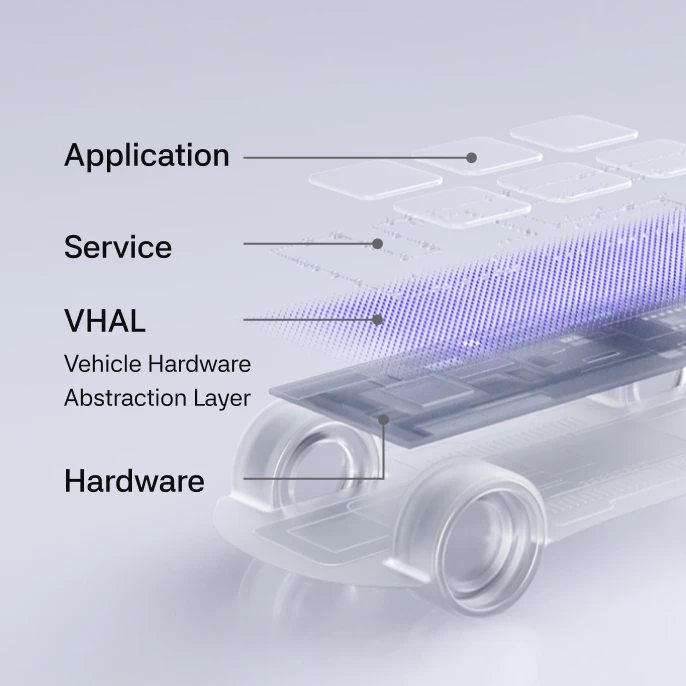
42dot adopts an architecture that decouples hardware and software to maximize software development efficiency. Software separated from hardware dependencies is centrally processed on high-performance computing resources, eliminating duplicate functions repeated across traditional distributed architectures and improving overall system efficiency. The network architecture is also designed around a centralized structure, consolidating traffic through select nodes while leveraging Ethernet-based communication to increase architectural flexibility and strengthen the reliability and scalability of data transmission.
Next Page
Hardware-Independent,
Reusable Integrated
Vehicle OS