End-to-End
Autonomous Driving AI
Built on an end-to-end architecture, the autonomous driving model integrates safety, driving, and parking capabilities within a unified system. Its infrastructure-light design enables flexible deployment across a wide range of vehicle types. Using only general-purpose sensors, the system perceives surrounding environments and generates driving trajectories, effectively reducing both system complexity and cost.
The system also provides insight into perception results and driving decisions, helping users better understand how the vehicle interprets and responds to real-world driving situations. Self-recovery logic further allows the system to respond to unexpected operating conditions, maintaining optimal performance and delivering a stable autonomous driving experience.
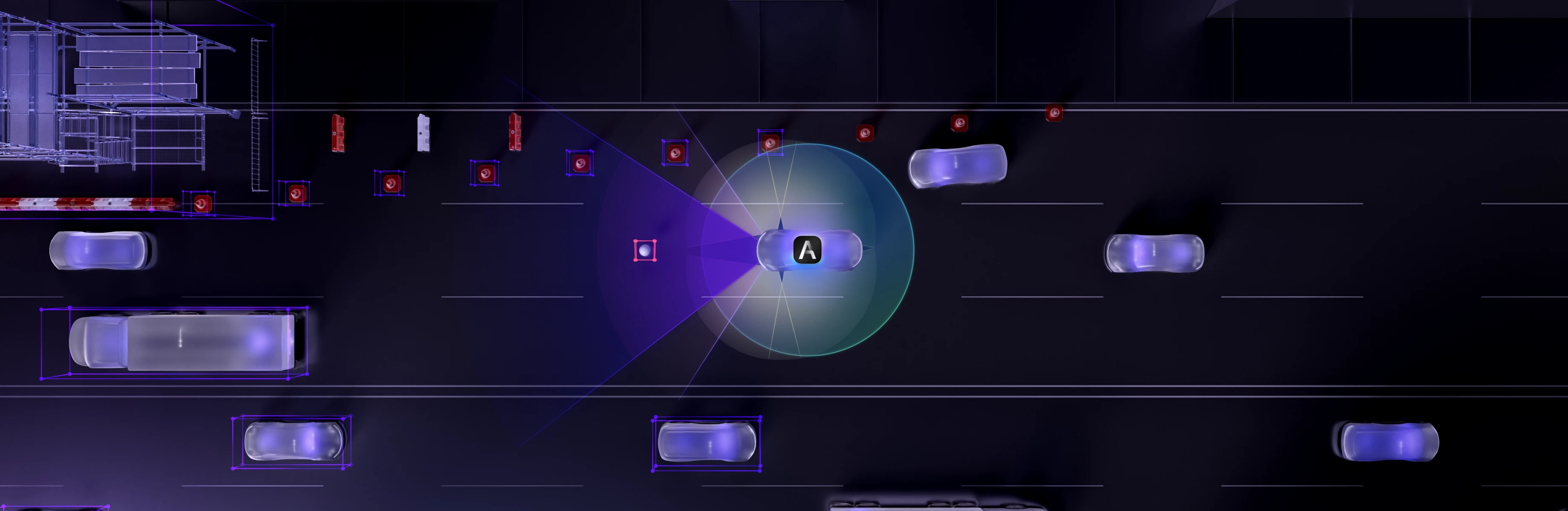

Built on an end-to-end architecture, the autonomous driving model integrates safety, driving, and parking capabilities within a unified system. Its infrastructure-light design enables flexible deployment across a wide range of vehicle types. Using only general-purpose sensors, the system perceives surrounding environments and generates driving trajectories, effectively reducing both system complexity and cost.
The system also provides insight into perception results and driving decisions, helping users better understand how the vehicle interprets and responds to real-world driving situations. Self-recovery logic further allows the system to respond to unexpected operating conditions, maintaining optimal performance and delivering a stable autonomous driving experience.
Autonomous Driving AI Model Architecture
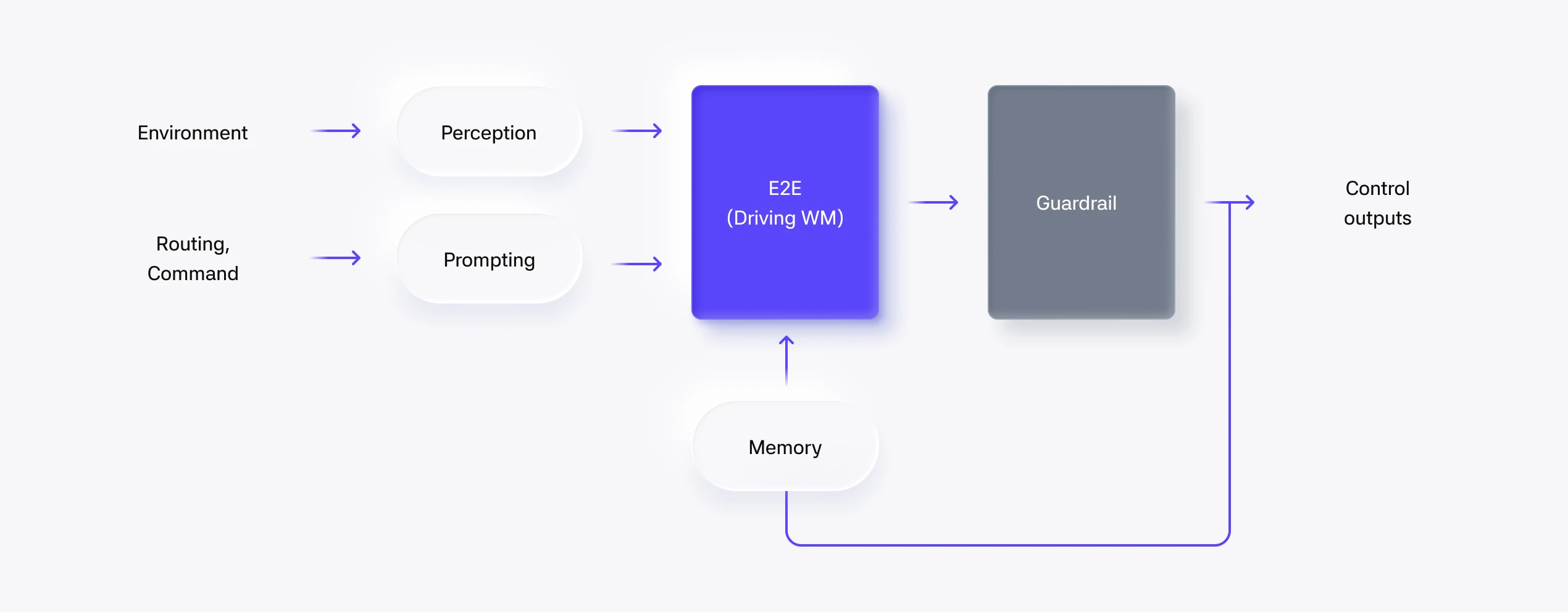
Autonomous Driving AI is built on an end-to-end architecture that processes sensor data, navigation routes, and vehicle motion information,
converting them into driving intent and plans before generating vehicle control signals.
The architecture consists of five specialized modules with distinct responsibilities to support scalability
and ease of modification while maintaining a balance between performance and stability across diverse driving environments.
• Perception: Processes external environmental data captured through vehicle sensors.
• Prompting: Interprets and processes signals to align system behavior with user intent.
• World Model (Driving WM): Understands and predicts surrounding environments based on physical laws and causal relationships, generating driving plans and vehicle control commands accordingly.
• Memory: Manages short-term and long-term memory to support consistent and stable system outputs.
• Guardrail: Operates prior to vehicle control execution as a policy-based safety layer designed to ensure predictable control behavior and compliance with regional traffic regulations.
Training Physical AI Models
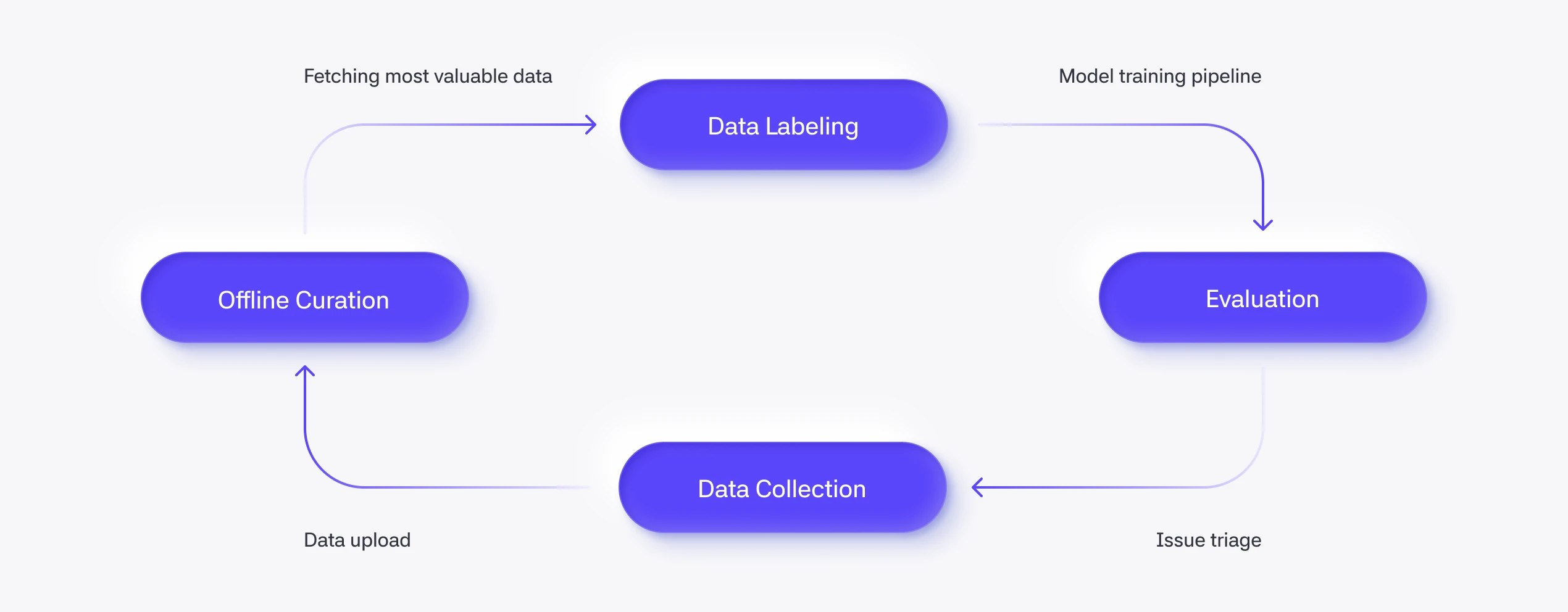
Through a data flywheel strategy, the system continuously learns from diverse edge-case scenarios
collected from real-world driving environments, enhancing overall model performance. Built on an automated
MLOps pipeline, the system analyzes failure-prone scenarios while leveraging large-scale GPU infrastructure for efficient model training and evaluation.
Newly trained models undergo rigorous regression testing prior to deployment,
enabling continuous performance improvement through rapid iterative learning cycles.
Next Page
Human-Like
Agentic AI